


10. Security Installations
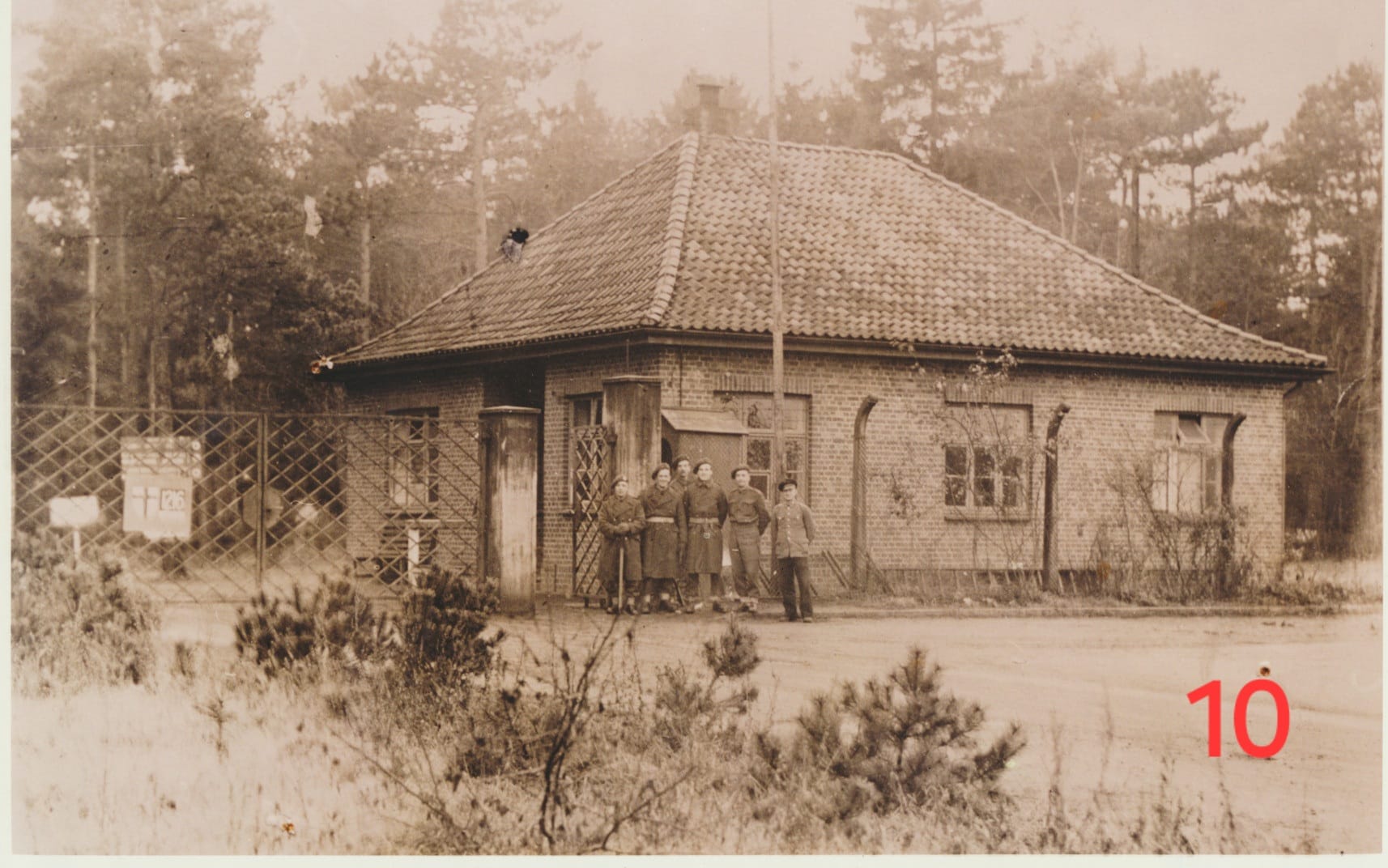
The security installations
Use of the installations from 1939 to 1945
The naval artillery arsenal was secured with a 2-meter-high and 20-kilometer-long fence.
There were 13 gates leading into the installation, 5 of which had massive guard buildings,
and 2 of which were railroad gates.
The gates and security installations were originally controlled by the so-called “Blue Guard,” but later the soldiers of the staff company took over control. The guard was mainly responsible for gate control, persons, and vehicles. At Gate 2, the guard was responsible for patrol duty around the perimeter and inside the compound and for guarding ammunition wagons in the sidings to Fahrenkrug.
A guard service for the five gates and warehouse guard consisted of 33 soldiers:
1 officer from the company service, 1 officer on duty, 1 deputy, 18 sentries, 1 runner,
6 bicycle patrols, and 5 warehouse guards. In addition, there were 8 trained guard dogs.
1945–1947 Demilitarization and arsenal dissolution
After the end of the war, the British occupying forces assigned a German guard
to the arsenal grounds. In agreement with the British guard, the guard carried out gate checks at Gate 1. All other gates were sealed.
At the end of demilitarization, the fencing around the arsenal was dismantled.
Use since 1947 Tenants and owners in succession
The former main guard building on Gildeweg was converted into a residential building,
is owned by the company, and is rented out.
The other building still standing at arko Forest was used for many years as
the forester's residence for many years, is also owned by the company and, following
renovation, now serves as an office.
Furthermore, with the possible exception of a few remaining fence posts,
nothing remains of the security installations.
Current status 2025
W. Pelz GmbH & Co. KG, Willy-Pelz-Str. 8-9, Wahlstedt